Agenda-setting theory
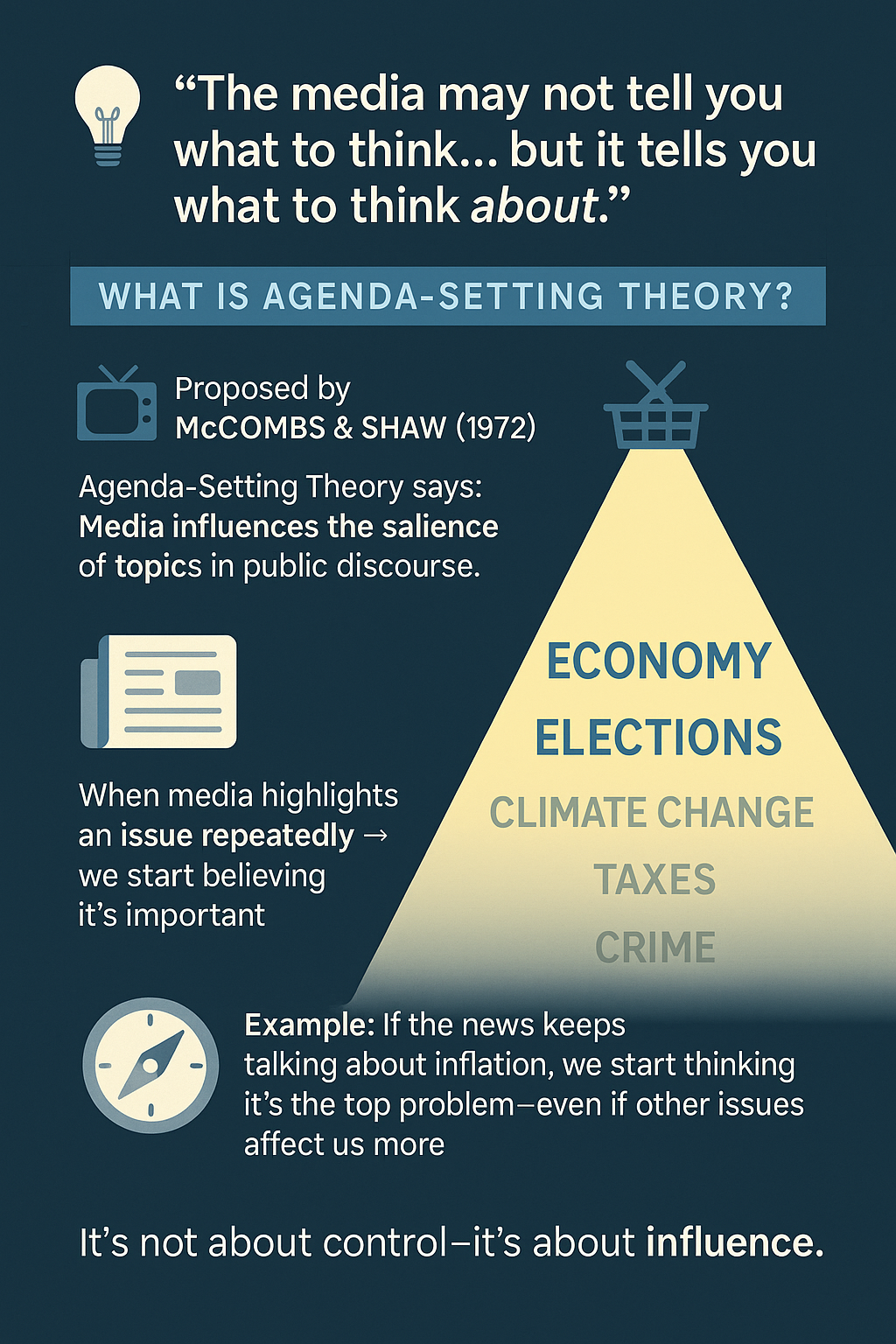
Agenda-setting theory suggests that the communications media, through their ability to identify and publicize issues, play a pivotal role in shaping the problems that attract attention from governments and international organizations, and direct public opinion towards specific issues. The theory suggests that the politician and journalists can shape public opinion through media by determining what issues are given the most attention, and has been widely studied and applied to various forms of media. The way news stories and topics that impact public opinion are presented is influenced by the media. It is predicated on the idea that most individuals only have access to one source of information on most issues: the news media. Since they establish the agenda, they may affect how important some things are seen to be.
The agenda-setting by media is driven by the media's bias on things such as politics, economy and culture, etc. Audiences consider an issue to be more significant the more media attention it receives (media issue saliency). For instance, even if readers do not have strong feelings about immigration, they might believe that it is a pressing problem at the time if there is consistent journalistic coverage of it over the period of a few months.
The theory has two core assumptions. The first is that it is the media that controls the reality. The media does not report the reality but instead filters and shapes it. The second assumption is that it is the media that gives importance or saliency to its topics as the more likely the media focuses on certain issues, the more likely the public perceive such issue as important and therefore demands action.
Research has shown that the media's persistent coverage of particular issues can lead to heightened public interest and demand for action, thereby influencing public opinion and even policy outcomes. Notably, events like the Watergate scandal illustrate the theory's relevance, as extensive media coverage played a crucial role in shaping public scrutiny of President Nixon, ultimately leading to his resignation.
In the modern context, the rise of social media has transformed the landscape of agenda setting, allowing for a more direct dialogue between public figures and citizens, while also challenging traditional media’s gatekeeping role. This evolution underscores the continuing significance of agenda-setting theory in understanding communication dynamics and public discourse across diverse cultural contexts.
Activity
Write a paragraph in response to the following question, using the Agenda Setting theory and include a relevant example that we have studied in class.
"Assess the extent to which public discourse is controlled by the media"


No comments:
Post a Comment