GATEKEEPING
Gatekeeping is the process of deciding what information gets selected, prioritised, changed or excluded before reaching an audience.
OLD MEDIA
Journalist
↓
Editor
↓
News organisation
↓
Audience
DIGITAL MEDIA
User
↓
Platform
↓
Algorithm
↓
Audience
But also:
Audience
↓
shares/comments
↓
algorithm
↓
more users
So the audience becomes part of the gatekeeping process.
Who is the gatekeeper now?
Who is the gatekeeper now?
Students can discuss:
- journalists
- editors
- media owners
- governments
- regulators
- algorithms
- platforms
- influencers
- audiences
This links well to:
Curran & Seaton → ownership
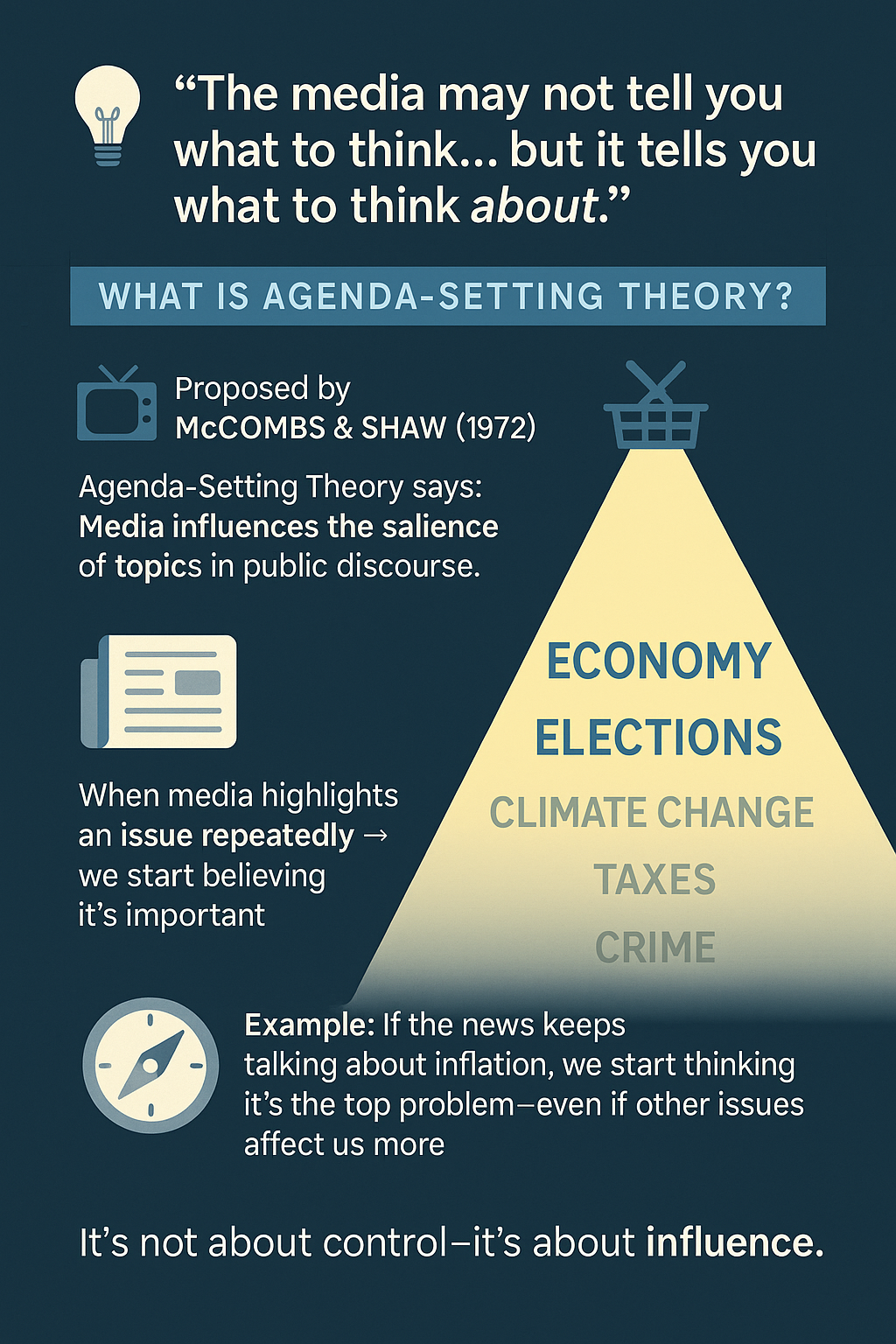
McCombs & Shaw → agenda-setting
Livingstone & Lund → regulation
Shirky → audience power
Hall → reception
3. ALGORITHMIC POWER
You have touched this several times, particularly in your Clancy/true-crime work and public discourse material, but I would turn it into a proper examinable concept.
Your September material already identifies algorithmic power as useful terminology and discusses how short-form platforms can reward sensational content and engagement.
Give them this chain:
Algorithmic power = the ability of platforms' automated systems to influence what users encounter, engage with and potentially ignore.
Then:
Algorithm
→ selects content
→ increases visibility
→ influences engagement
→ shapes audience experience
→ potentially influences discourse.
But immediately teach the counterargument:
Algorithms do not necessarily determine what audiences believe.
Audiences can:
- scroll
- reject
- search elsewhere
- follow alternative sources
- create their own content
- challenge dominant narratives.
Theory connections
Shirky
Audience becomes producer.
Hall
Audiences decode differently.
Agenda-setting
Visibility influences what receives attention.
Gatekeeping
Algorithms become new gatekeepers.
Hegemony
Repeated messages can normalise particular ideas.
That gives them a fantastic theoretical chain.
4. POST-TRUTH + MISINFORMATION
This is the biggest Power & Media / Regulation crossover that I think would strengthen the final preparation.
Your blog has touched this through Trump/social media, true crime, algorithms and regulation, but I would formalise it.
Teach these distinctions:
Misinformation
False information shared without necessarily intending to deceive.
Disinformation
False information deliberately created or distributed to deceive.
Malinformation
Genuine information used in a misleading or harmful context.
Then connect this to:
- social media
- algorithms
- political communication
- citizen journalism
- AI
- deepfakes
- clickbait
- sensationalism
- echo chambers
- confirmation bias.
Excellent debate
Does digital media democratise information or undermine reliable information?
That single question can generate material for:
- Power & Media
- Media Regulation
- Media Ecology
5. PLATFORM CAPITALISM
This is probably the most useful newer concept for your students.
Your blog already lists platform capitalism in the September terminology bank.
But I would actually teach it.
Simple definition
Platform capitalism describes the economic model in which digital platforms generate value by controlling digital infrastructure, data, attention and interaction.
Students can then understand:
Users
create content
↓
Platforms
collect data / attention
↓
Algorithms
organise content
↓
Advertising
monetises attention
↓
Platforms
gain economic and cultural power.
This is a much more sophisticated way of talking about TikTok, YouTube, Facebook, Netflix etc. than simply saying:
"Technology has changed media."
6. CONVERGENCE
You've used convergence throughout the year, but I'd make students explicitly understand it as a synoptic concept.
Technological convergence
One device performs multiple media functions.
Media convergence
Different media forms/platforms overlap.
Industrial convergence
Companies operate across multiple media industries.
Cultural convergence
Audiences participate across multiple media platforms.
Then give them:
Black Panther
Film
↓
Disney
↓
cinema
↓
streaming
↓
social media
↓
YouTube
↓
fan communities
↓
merchandise
↓
global audience
Suddenly one case study can answer multiple questions.